he Nature of Black: Differences Rooted in Optics
Many buyers struggle to tell PET Gloss Black and PET Piano Black apart at first glance. Their differences extend far beyond shade and price. We examine them through calendaring precision, surface optical properties, coating design and the visual character of black itself. Both are PVC decorative films with PET release liners and air-release channels for dry installation. Engineering teams set two distinct standards for premium gloss when they develop these films.
PET Gloss Black: Balanced Finish for Mass Production
We design PET Gloss Black for steady, high-volume distribution. Compared with conventional paper-backed glossy wrap, the PET liner drastically cuts orange peel and delivers a bright, qualified mirror finish to meet basic demands for shiny black exteriors. Light bounces freely across the surface and creates vivid reflections, lending the film an open, luminous black tone. Even so, its pigment formula and surface tuning prioritize consistent mass production rather than ultimate depth. Faint grey undertones appear under direct strong sunlight. This is not a defect, but a deliberate trade-off. The film lowers application difficulty, hides minor flaws and keeps consistent colour across large batches. Its standard top coat offers no self-healing performance, so micro swirl marks from washing stay permanently. Therefore, it serves as a practical option for projects that require gloss without OEM luxury paint standards. It fits bulk orders, roof wraps and temporary styling, where buyers value stable output and easy installation over extreme optical performance.
PET Piano Black: Light Control for OEM Lacquer Look
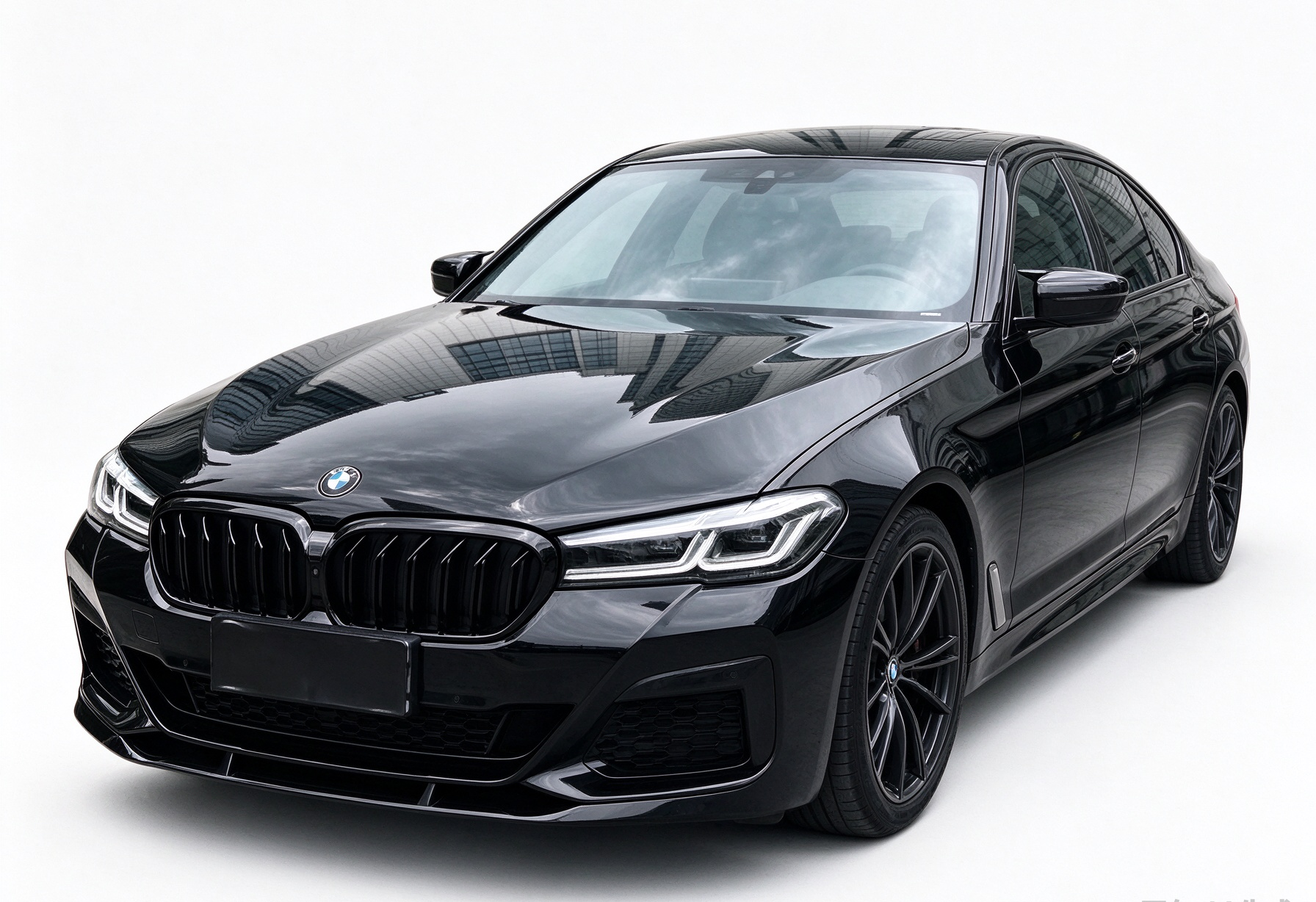
We engineer PET Piano Black to shift from simple glossy black to lacquer black. It targets the rich, restrained saturation of premium piano varnish and luxury factory paint. Light control sits at its core design principle. Optimised pigment dispersion and stricter calendaring reduce light scattering inside the film. The result is a wet, dense black that never fades or turns grey under sunlight. It produces sharp, crisp reflections without distortion or haze. Our team pushes orange peel control close to the limit of PVC wrap technology, so large panels like hoods and doors maintain one seamless, even plane. Two versions are available: standard grade and mild self-healing grade with a thin PU top coat that softens minor heat scratches. We must remind buyers clearly: this is still a PVC wrap. Its healing effect stays limited and cannot match TPU paint protection film.
Trade-off of Mirror Finish: Higher Installation Standards
Still, outstanding optical performance comes with inherent sensitivity. A surface that renders sharp reflections also reveals every imperfection. Dust spots, adhesive marks, water stains and fine scratches all stand out. Installers need a dust-free workshop and solid experience, especially on compound curves. Little room for error pushes up application risk and product price. This distinction matters greatly for export distributors. If sellers mislabel ordinary PET Gloss Black as Piano Black, they create mismatched expectations and costly claims. PET only refers to the liner material; both films use PVC substrate and differ fundamentally from TPU PPF.
How to Choose: Bright Gloss or Deep Layered Black
PET Gloss Black delivers reliable gloss and broad compatibility. PET Piano Black pursues optical depth and the understated elegance of cured lacquer. When you pick between them, you do not merely choose a darker shade. You align the film’s optical trait with your customer’s real demand: do they want a bright shiny wrap, or the calm, layered deep black of premium automotive paint?